
Vein Center
Vein Care for Lafayette and Acadiana: Lighter, More Comfortable Legs
Aching, swelling, or bulging veins aren't just part of getting older. We find the cause with a simple ultrasound and treat most vein problems right here in our Lafayette office, so you can get back to your day.


Six stages of vein disease, from spider veins to an open sore


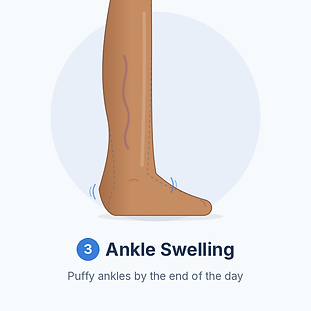


Do These Symptoms Sound Familiar?
Many people live with vein disease for years thinking it is just “normal aging” or cosmetic. The stages progress from spider veins to bulging varicose veins, swelling, skin darkening, and in advanced cases open sores. Early treatment prevents worsening.
Common Signs We Treat
How We Help
-
Visible bulging, twisted, or rope-like
veins
-
Leg heaviness, aching, or fatigue that
worsens by evening
-
Swelling in the ankles, calves, or feet
-
Spider veins or brownish skin
discoloration
-
Restless legs, nighttime cramping, or
itching
-
Slow-healing sores or ulcers near the
ankles
Every visit starts with answers, not guesswork. We find the source of your leg symptoms and treat it in our office, with no hospital stay.
-
Ultrasound vein mapping. A painless scan shows exactly which vein valves aren't working.
-
RF ablation. Gentle heat closes the problem vein through a thin catheter.
-
VenaSeal closure. A medical adhesive seals the vein with no heat and very little numbing.
-
Phlebectomy. Bulging surface veins are removed through tiny nicks, with no stitches.
-
Sclerotherapy. A quick injection fades smaller veins and spider veins.
Most patients walk out the same day and are back to normal activities within a day or two.
What Patients Notice After Treatment
-
Lighter, less achy legs
-
Reduced swelling so shoes and socks fit better
-
Fewer or smaller visible veins
-
Better ability to stand, walk, and exercise
-
Improved skin appearance over time
What Can Contribute to Vein Problems?
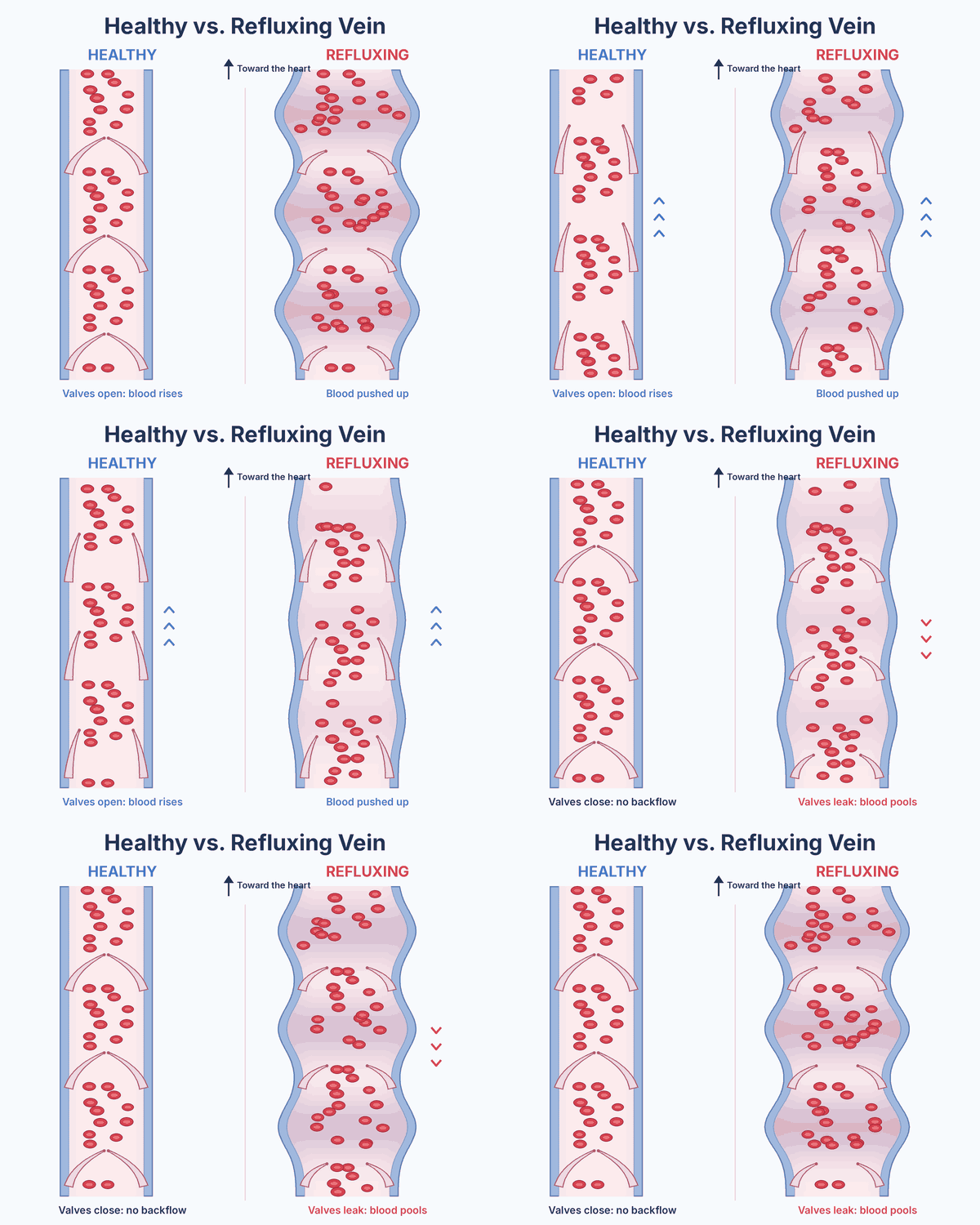
Vein issues often develop when the valves inside the veins weaken or stop working properly. Blood then pools in the legs instead of flowing smoothly back toward the heart. Several factors can increase the chance this happens:

-
Age — Vein valves naturally lose strength over time.
-
Family history — Some people inherit a tendency toward weaker vein walls or valves.
-
Prolonged standing or sitting — Jobs or daily routines that keep you on your feet or seated for long periods put extra pressure on leg veins.
-
Pregnancy — Increased blood volume and pressure from the uterus can strain veins; symptoms often improve after delivery.
-
Weight — Extra body weight adds pressure on the veins in the legs.
-
Prior blood clots or vein injury — Damage from a clot or trauma can affect how valves function later.
-
Hormonal changes — Shifts related to pregnancy, menopause, or certain medications can influence vein tone.
These factors do not guarantee vein disease, but they help explain why some people develop heaviness, swelling, or visible veins while others do not. A simple ultrasound evaluation can show whether valves are working properly and guide the right next step.
Why Patients Choose Us for Vein Care
Louisiana Vascular Limb Salvage and Cardiology’s Vein and Leg Pain Center is the right place for your venous disease issues. Our highly trained providers use focused methods to diagnose and treat a broad spectrum of venous conditions. With decades of experience treating venous and vascular disease across the Acadiana region, we focus on comfortable, office-based solutions that get you back to daily life quickly.

Frequently Asked Questions
What’s the difference between varicose veins and spider veins?
A varicose vein is a large, gnarled vein, typically in the legs and feet. Spider veins are smaller dilated vessels that appear red, blue, or purple on the skin and often resemble spider legs. We treat both to relieve discomfort and address appearance.
What is venous reflux?
Venous reflux occurs when vein valves fail to close properly, allowing blood to pool in the legs. This leads to varicose veins, swelling, and heaviness.
What are the symptoms of venous reflux?
Leg heaviness or aching that worsens through the day, swelling, visible varicose or spider veins, restless legs, skin discoloration, and itching.
What are the treatment options for venous reflux?
Options include RF ablation, VenaSeal, phlebectomy, sclerotherapy, compression stockings, and lifestyle measures such as elevation and walking. We match the approach to your ultrasound findings.
How is vein and leg pain treated?
Treatment starts with comprehensive ultrasound mapping. Most patients improve with office-based procedures that require little downtime.
What is vein ablation?
A thin catheter is guided into the problem vein under ultrasound. Controlled heat (RF) or adhesive (VenaSeal) closes the vein so blood reroutes through healthy veins. Done with local numbing in the office.
What are VenaSeal closures?
VenaSeal uses a medical adhesive to seal the vein without heat. Many patients find it quick and comfortable with minimal numbing needed.
What is sclerotherapy?
A solution is injected into smaller surface veins or spider veins to collapse them. No downtime.
Will I feel much during treatment?
We use local numbing. Most patients find RF, VenaSeal, and phlebectomy very tolerable.
How soon can I get back to my routine?
Walking is encouraged right away. Most people resume regular activities within 1–2 days.
Does insurance cover this?
Treatment for symptomatic vein disease is commonly covered. We check your benefits before any procedure.
How long do the results last?
Closed or removed veins stay treated. New veins can form over time, but the original problem does not return.
Ready for lighter, more comfortable legs?
Call (337) 456-6523 or request an appointment online.